Craft
Do Trichy Cigars or Suruttus Survive Today as Bidis?
Trichy cigars, Tamil suruttus, and bidis are all rolled tobacco products. Their names, materials, manufacture, and histories show that they are not the same thing.
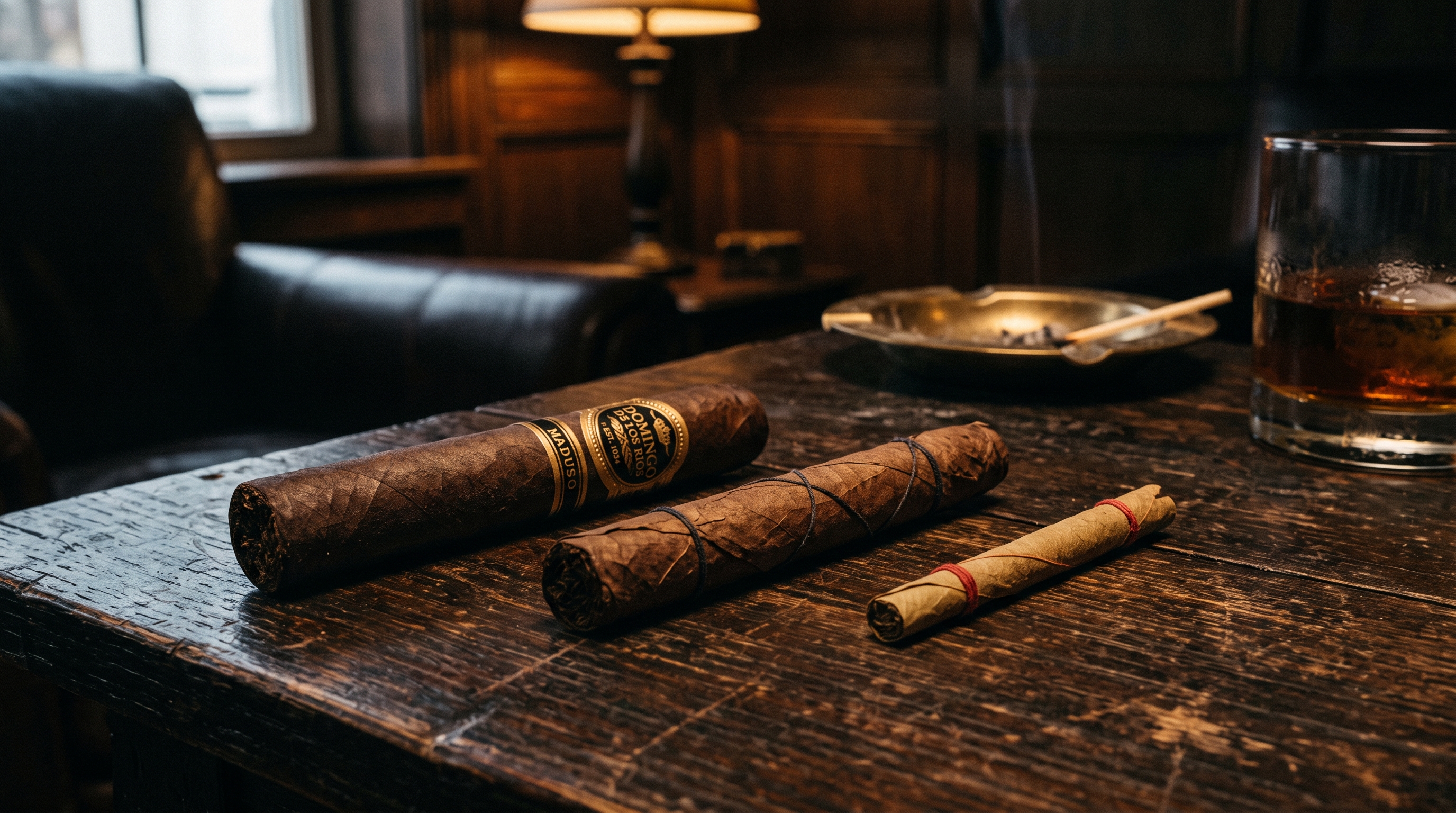
The resemblance is easy to see. A Trichy cigar, traditionally called a cheroot in English and a suruttu in Tamil, is tobacco rolled by hand into a leaf wrapper. A bidi is also a small hand-rolled tobacco product wrapped in a leaf. Both belonged to industries that relied on manual skill, modest tools, and networks of small producers.
So did the old Trichy cigar survive into the present under another name, as the bidi?
The short answer is no, at least not in any simple sense. A bidi is not merely a smaller Trichy cigar. The two use different wrappers and different forms of tobacco, are assembled differently, and historically occupied different markets. Most importantly, a Government of India labour inquiry published in 1946 recorded bidi making and cigar making in Trichinopoly at the same time. One did not appear only after the other vanished.1
There may still be connections through workers, household production, tobacco merchants, and local vocabulary. Those connections deserve investigation. But resemblance is not proof of descent.
Suruttu, cheroot, and Trichy cigar
The first source of confusion is language.
Suruttu is a Tamil word associated with rolling or a roll of tobacco. The Anglo-Indian glossary Hobson-Jobson traced the English word cheroot to Tamil shuruttu and defined the product as a cigar cut flat at both ends. It also identified the cheroots of Trichinopoly as “Trichies.”2 The University of Madras Tamil Lexicon gives suruttu a broad range that includes cigar, cheroot, and cigarette.3
These words therefore do not form a perfect technical system. Suruttu can name a broad local idea, a roll made for smoking. Cheroot became a more specific English commercial term. Trichy cigar or Trichinopoly cigar named a product associated with a place, a manufacturing reputation, and an export trade.
The words overlap, but that does not make every rolled tobacco product the same object.
How a bidi is made
A bidi begins with two materials: a tobacco mixture and a non-tobacco wrapper leaf.
The 1946 labour inquiry described the wrapper as the leaf of the tendu tree, gathered mainly from the forests of central India and what was then Hyderabad State. Workers softened the leaves in water and cut them into small, roughly rectangular pieces. They spread a tobacco mixture along each piece, rolled it into a narrow conical form, folded one end, and tied the other with cotton thread. The finished bidis were inspected, dried in a warm room, bundled, wrapped in paper, and labelled.1
A modern Government of India monograph gives essentially the same definition: a bidi contains a small quantity of sun-cured smoking tobacco, loosely packed inside a dried tendu leaf and secured with cotton thread.4
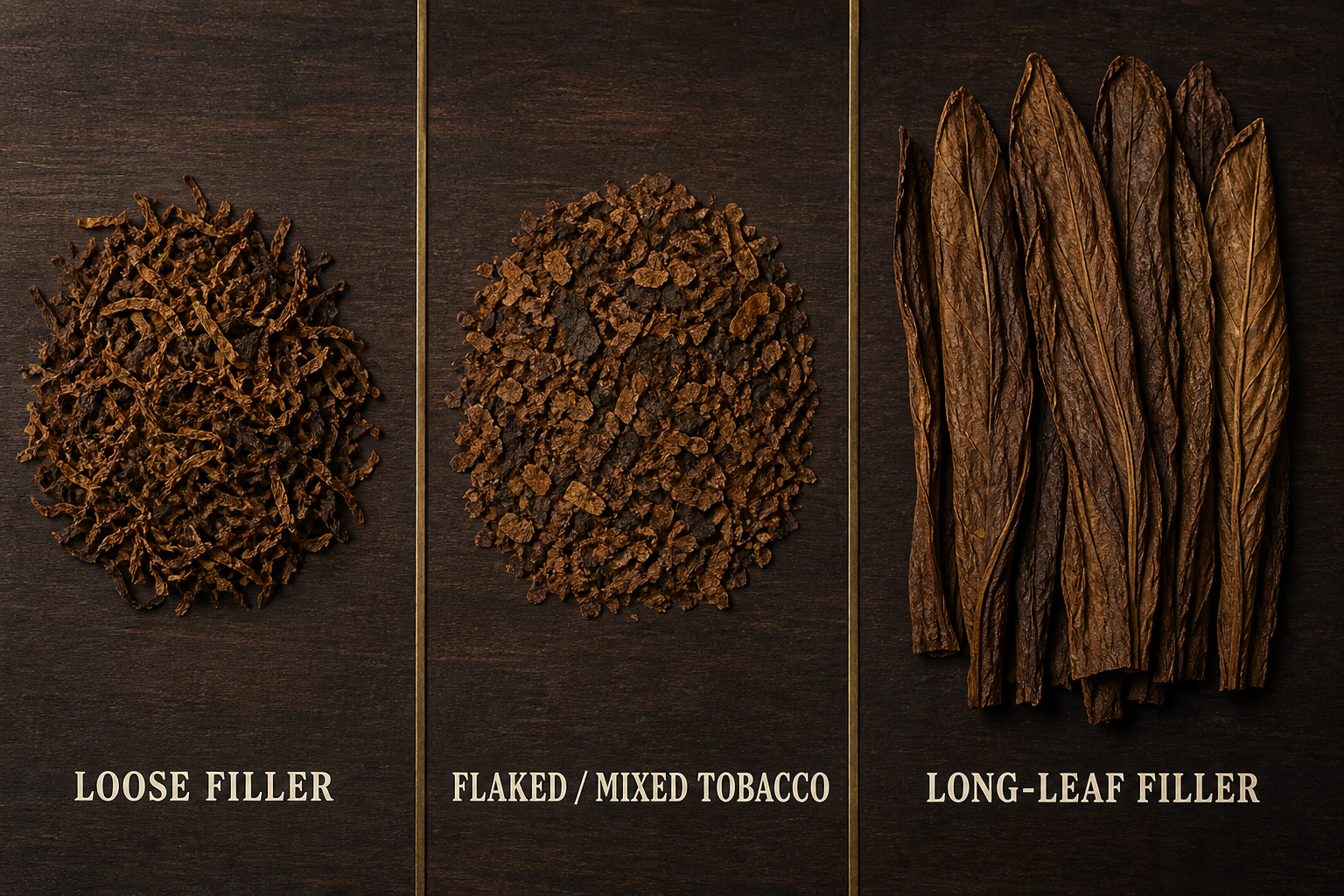
The visible signs follow from that construction. A bidi is usually thin and tapered. Its brown outer leaf is not tobacco. A thread often closes or identifies it. Inside is loose or flaked tobacco rather than a compact bundle of long tobacco leaf.
This was high-volume work. The labour inquiry estimated that a skilled worker could make hundreds of bidis in a day. Production could take place in factories, through contractors, or inside workers’ homes. In South India, home work was performed largely by women, often within systems controlled by middlemen.1 Recent research in Vellore and Tirupattur shows that home-based bidi rolling remains a livelihood in Tamil Nadu, although workers reported low pay, occupational harm, and a desire for better alternatives.5
How a Trichy cigar or cheroot is made
A cigar or cheroot is built from tobacco leaf inside and outside.
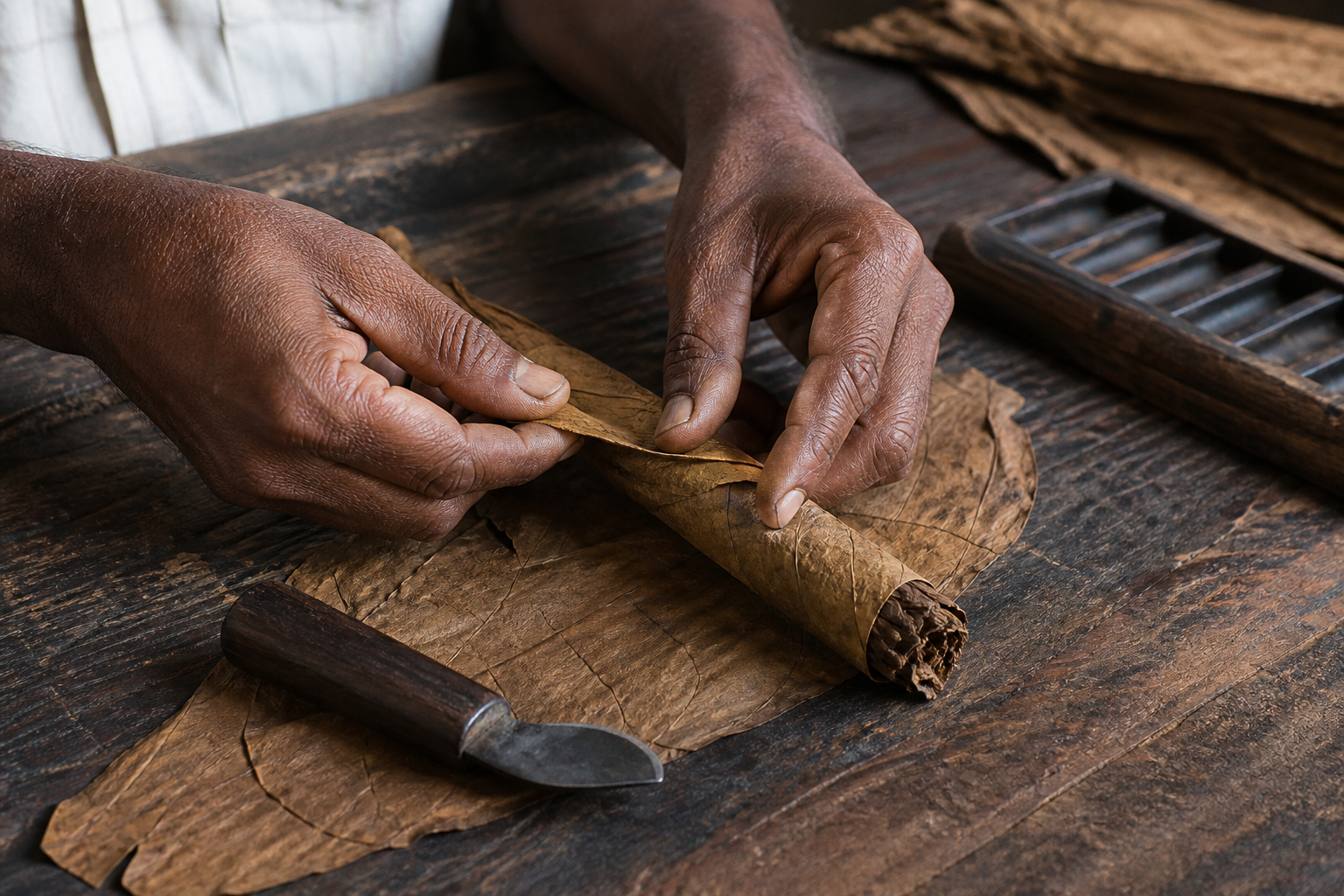
The 1946 inquiry described three parts: filler, binder, and wrapper. Workers moistened tobacco leaves so they could be handled, removed the midrib, and sorted the leaves according to use. Filler formed the centre. Binder held that filler in shape. A finer tobacco leaf made the outer wrapper. The rough roll could be placed in a press before the wrapper was applied and fixed at the end with paste.1
The report said that much of the filler used by the factories it studied came from the Trichinopoly area, with some from Guntur. Before wartime shortages, premium manufacturers also used imported tobacco, especially wrapper leaf. Materials therefore varied by maker, grade, and period.
The same report distinguished a high-grade cigar from a cheroot by wrapping and finish. It described many cigars as double-wrapped and closed at one end, while cheroots were generally single-wrapped and cut flat at both ends.1 That was a period industry classification, not a timeless rule. Its description of the cheroot as an “inferior” product also reflects the class judgements of its investigators and should not be repeated as an objective measure of worth.
Recent reporting from Fenn Thompson & Co. in Woraiyur described a recognisably cigar-like process still in use in 2023: tobacco leaves were destemmed, gathered into a bunch, wrapped with another tobacco leaf, and placed in wooden moulds. The firm also described long fermentation and flavouring practices for some products.6 This is not the construction of a bidi.
The differences at a glance
The most useful distinction is material, not prestige.
- Bidi: loose, flaked, or mixed tobacco wrapped in tendu or another non-tobacco leaf, usually tapered and tied with thread.
- Trichy cigar or cheroot: tobacco-leaf filler held and finished with tobacco-leaf binder and wrapper, generally thicker, with the classic cheroot cut open at both ends.
- Suruttu: a Tamil word with broader usage. In the history of Trichy it commonly refers to a cigar or cheroot, but dictionaries show that speakers have also used it for other tobacco rolls.
The shared act of hand rolling matters, but it is not enough to erase the structural difference. A spring roll and a stuffed vine leaf are both filled wrappers; that does not make one the survival of the other.
They coexisted in Trichy
Chronology gives the strongest answer to the original question.
In its chapter on the South Indian bidi industry, the 1946 inquiry named Trichinopoly among the important centres of bidi manufacture in the Madras Presidency. The investigators did not include the city in their sampled bidi workplaces, so the report does not provide a reliable Trichy bidi-worker total.1
In a separate chapter on cigars, the same inquiry described Trichinopoly and Woraiyur as major cigar-making centres. It reported nearly 400 excise registrations, while warning that these did not represent 400 independent factories because a single producer could register several names. The local manufacturers’ association supplied about 90 names of proprietors. The inquiry estimated that the Trichinopoly cigar trade employed about 1,870 people in 1944.1
This is evidence of parallel industries in the same city. By the 1940s, Trichy did not face a choice between making cigars or making bidis. It made both.
The industries also organised labour differently. The cigar factories described in Trichy generally employed workers directly at a workplace. South Indian bidi production more often used contractors, middlemen, and home workers. Both could be small-scale and both involved exploitation, including child labour, but their commercial structures were not identical.1
What, then, has survived?
Three different things appear to have survived, and they should not be collapsed into one.
First, the Trichy cigar itself survived the collapse of the larger industry. A 2023 report presented Fenn Thompson & Co. as the last remaining Trichy producer, operating with only a few skilled workers.6 The Tobacco Board of India also listed the firm as a renewed exporter in its 2024 records.7 An exporter registration does not by itself prove the scale or continuity of manufacturing in 2026, but it supports the more careful conclusion that the Trichy cigar persisted under its own identity into the recent past. It did not survive only by becoming a bidi.
Second, bidi making survives as a separate and much larger Indian tobacco industry. It shares features with the older cigar economy, including hand work, piece rates, household labour, and dependence on merchants or contractors. These are important social continuities, not evidence that the products are identical.
Third, the word suruttu survives. Because it can refer broadly to a roll for smoking, everyday usage may blur distinctions that manufacturers, tax officials, historians, or public-health researchers make more sharply. A small local tobacco roll may be called a suruttu without being a Trichinopoly cigar of the export trade.
There is one question the documents examined here cannot answer. When Trichy’s cigar factories closed, did some cigar workers or their families move into bidi making? The coexistence of both trades makes such movement possible. Proving it would require oral histories, employment records, family papers, or testimony from former workers. No source located for this article establishes a direct line of descent.
The careful answer
Trichy cigars, cheroots, and suruttus are closely related terms. Bidis belong to the same broad world of Indian hand-rolled tobacco. They are not, however, the same product.
A Trichy cigar or cheroot uses tobacco leaf as its outer wrapper and is made from filler, binder, and wrapper tobacco. A bidi usually contains loose tobacco wrapped in tendu or another non-tobacco leaf and tied with thread. Historical evidence shows that people made both in Trichy during the same period.
The bidi may preserve parts of a labour world that once surrounded the Trichy cigar: hand skill, small workshops, home work, family knowledge, and networks of intermediaries. But that is a history of proximity and possible exchange, not proof that the Trichy cigar changed form and became the bidi.
One final similarity should not be mistaken for reassurance. Both are combustible tobacco products. Neither should be described as safer because it is handmade, traditional, smaller, or wrapped in a leaf.8
Sources
-
D. V. Rege, Report on an Enquiry into Conditions of Labour in the Bidi, Cigar and Cigarette Industries, Government of India Labour Investigation Committee, 1946, especially pp. 6–7, 25–27, and 43–44. The report’s class and quality judgements are treated here as period language rather than neutral fact. ↩ ↩2 ↩3 ↩4 ↩5 ↩6 ↩7 ↩8
-
Henry Yule and A. C. Burnell, “Cheroot,” Hobson-Jobson, 1903 edition. ↩
-
University of Madras, Tamil Lexicon, “சுருட்டு” (suruttu). ↩
-
Ministry of Health and Family Welfare, Government of India, Bidi Smoking and Public Health, 2008, especially pp. 24 and 194. ↩
-
A. R. Parry et al., “Implementing FCTC Article 17 Through Participatory Research With Bidi Workers in Tamil Nadu, India,” Nicotine & Tobacco Research 24, no. 11, 2022, pp. 1714–1721. The fieldwork was conducted in Vellore and Tirupattur, not Tiruchirappalli. ↩
-
Akanksha Mishra, “Trichy cigars were once a Churchill favourite. Now, it’s choked by taxes in a room of 3,” ThePrint, 22 March 2023. The article’s Churchill claim is not relied upon here. ↩ ↩2
-
Tobacco Board, Government of India, registered exporters list, 2024, entry for Fenn Thompson & Co. ↩
-
World Health Organization, Tobacco: Deadly in Any Form or Disguise, 2006. ↩